
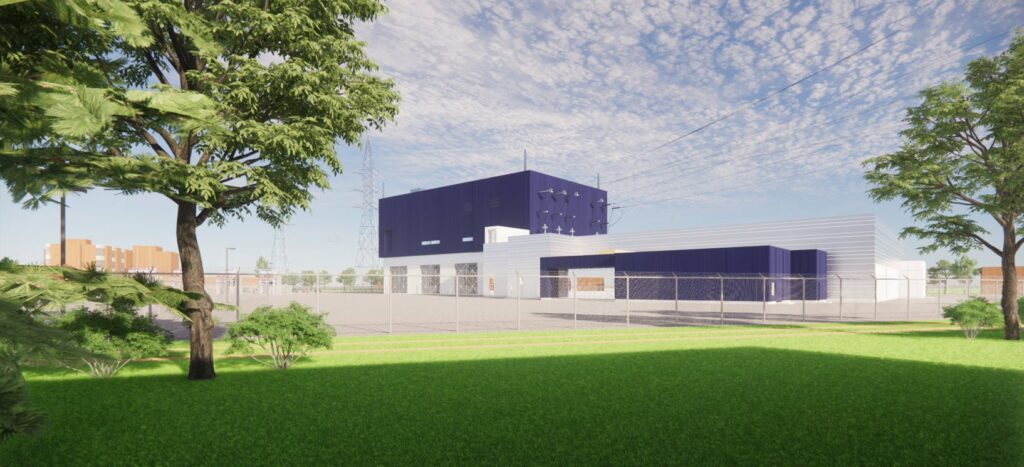
Many residents have called to ask me what all of the activity is about surrounding Hydro-Québec in District 2. This is part of a plan to upgrade the transmission system between LaSalle and Saint-Laurent. The project provides for rebuilding the 120-kV Aqueduc-Saraguay overhead transmission line at 315 kV over a span of 18 km; converting two120-kV substations to 315 kV—Rockfield substation (in Lachine) and Hampstead substation (in Côte Saint-Luc behind Mount Sinai).
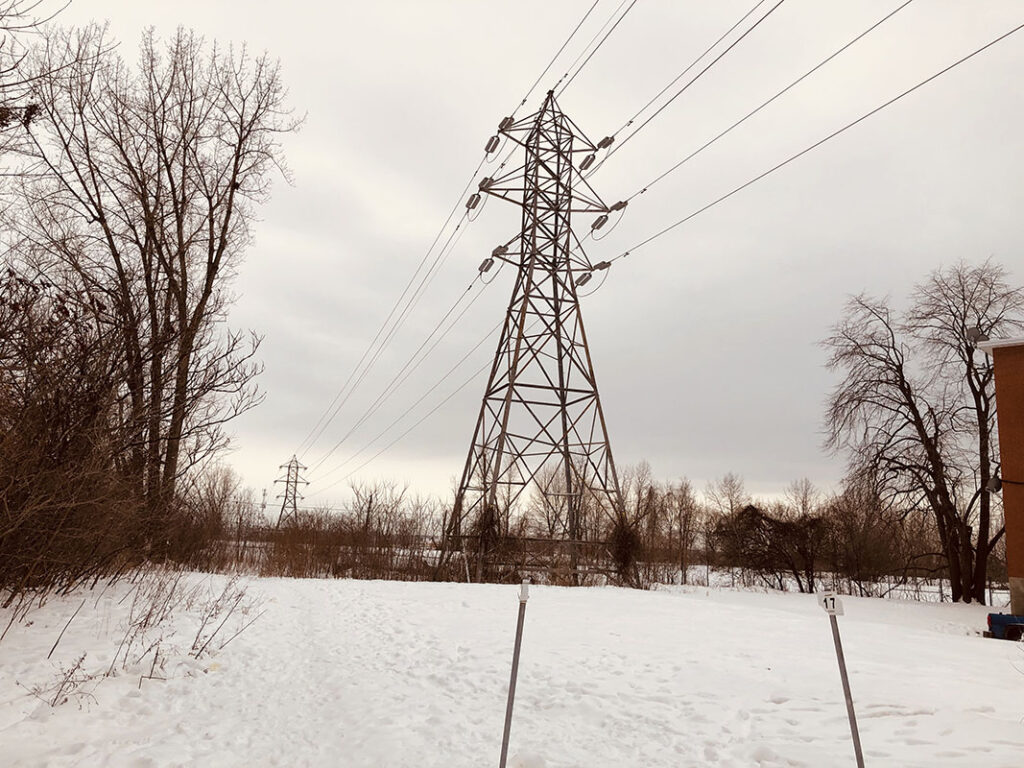
It now has come time to dismantle the lines for the new substation they are building behind Mont-Sinaï Hospital. This means removing the giant pylons along Merrimac and Marc Chagall. This project will take several years to complete. There are currently 16 Hydro towers in Côte Saint-Luc; that number will be reduced to nine. The one behind The Meadows Condo on Merrimac will be moved to the grounds of JPPs-Bialik. When the new towers are installed they will be taller with more velocity. Our city council point man for Hydro, Steven Erdelyi, says this should mean less power failures.
As work intensifies, Hydro-Québec has indicated that traffic interruptions will be brief, approximately five to 10 minutes at a time, and limited to a maximum of three to four occurrences per day. There will be no full-day road closures or required detours. During any temporary road closures or traffic interruptions, flagmen will be on site to manage traffic and ensure safety. Hydro-Québec also advised that they do not anticipate an unusual number of heavy trucks in the area during the dismantling process.
Our city staff has emphasized to Hydro the importance of keeping Marc Chagall Avenue accessible for snow dumping operations, as well as for drop-off and pick-up times at JPPS Bialik. Hydro is now aware of these operational requirements and will plan its work accordingly.
It was confirmed that La Marquise building will maintain access to its indoor parking at all times. Outdoor visitor parking will be temporarily blocked. Parking behind the newer rental buildings on Marc Chagall will also be closed for a few days.
Public Works staff will receive direct contact information for Hydro-Québec personnel to address any issues promptly, particularly to avoid disruptions to snow dump operations. These communication channels are being established to help ensure smooth coordination throughout the project.
Hydro-Québec expects to begin the work on January 27. Our Communications Department will prepare a general communication to residents outlining the project, acknowledging that there will be some limited disruption, but emphasizing that overall impacts on residents are expected to be minimal. The communication will also highlight the benefits of the project, including the removal of high-tension cables from the area. It will be noted that these high-tension cables do not specifically power the Marc Chagall area, and therefore there will be no electrical outages associated with this work. On-street parking tolerances will be issued.
More Details
Work schedule
From January to June 2026, Hydro-Québec will dismantle the transmission lines on steel towers in your sector.
Cable removal: road closures
Removing the cables will take two to three weeks per sector (see map).
Sector 1
•Full closure of the northbound U-turn lane on Boulevard Cavendish between Cavendish and Chemin Heywood
Sector 2
Chemin Kildare:
•Full closure between Chemin Merrimac and Avenue Marc-Chagall
•Access maintained for local traffic only
Avenue Marc-Chagall:
•Full closure between Chemin Kildare and Chemin Lismer
•Access maintained for local traffic only
Sector 3
•Full closure of Chemin Mackle from Avenue Brandeis (dead end)
Steel tower dismantlement: road closures
Dismantling towers no. 14 to 23 (see map) will take two to four days per tower.
Towers 14 and 15
• Closure of access to Hampstead substation via Boulevard Cavendish
• The northbound U-turn lane on Boulevard Cavendish will remain open.
Tower 16
•Full closure of the northbound U-turn lane on Boulevard Cavendish between Cavendish and Chemin Heywood
•Access maintained for local traffic only
Tower 20
•Partial reduction of the southbound roadway between Kildare and Mackle in the vicinity of the tower
•Two lanes will remain open to traffic
•Pedestrian pathway (1.5 m wide) to be set up on the roadway
Mitigation measures
Access will be maintained at all times for local traffic.
The work will be carried out during the hours allowed under municipal regulations: Monday to Friday, 7 a.m. to 7 p.m.
A limited amount of work between towers 23 and 24 will be carried out on weekends in the CPKC right-of-way only. This work will have no impact on public land or private residences.
Access to parking
– During certain stages of the work, access to parking spots may be limited.
– Signage: Hydro-Québec will install signs indicating when vehicles must be moved.
– Temporary parking stickers: the City of Côte Saint-Luc may provide free stickers authorizing street parking at night.
Contact the municipal public safety department at any time at 514 485‑6960 or www.cotesaintluc.org.
De nombreux résidents m’ont appelé pour me demander ce qui se passe autour d’Hydro-Québec dans le district 2. Cela fait partie d’un plan visant à moderniser le réseau de transport entre LaSalle et Saint-Laurent. Le projet prévoit la reconstruction de la ligne aérienne de transport d’électricité Aqueduc-Saraguay de 120 kV à 315 kV sur une distance de 18 km ; la conversion de trois sous-stations de 120 kV à 315 kV : la sous-station Rockfield (à Lachine), la sous-station Hampstead (à Côte Saint-Luc, derrière le mont Sinaï) et la sous-station Laurent (à Saint-Laurent).
Le moment est venu de démanteler les lignes pour la nouvelle sous-station en cours de construction derrière l’hôpital Mont-Sinaï. Cela implique de retirer les pylônes géants le long de Merrimac et Marc Chagall. Ce projet prendra plusieurs années. Il y a actuellement 16 pylônes Hydro à Côte Saint-Luc ; ce nombre sera réduit à neuf. Celui situé derrière le condominium The Meadows sur Merrimac sera déplacé vers le terrain de JPPs-Bialik. Lorsque les nouveaux pylônes seront installés, ils seront plus hauts et plus rapides. Steven Erdelyi, responsable Hydro au sein de notre conseil municipal, affirme que cela devrait réduire les pannes de courant.
À mesure que les travaux s’intensifient, Hydro-Québec a indiqué que les interruptions de circulation seront brèves, d’environ cinq à dix minutes à la fois, et limitées à un maximum de trois à quatre occurrences par jour. Il n’y aura pas de fermeture de route pendant toute la journée ni de déviations obligatoires. Pendant toute fermeture temporaire de route ou interruption de circulation, des signaleurs seront sur place pour gérer la circulation et assurer la sécurité. Hydro-Québec a également indiqué qu’elle ne prévoyait pas de nombre inhabituel de camions lourds dans la zone pendant le processus de démantèlement.
Le personnel municipal a souligné à Hydro l’importance de maintenir l’avenue Marc Chagall accessible pour les opérations de déneigement, ainsi que pour les heures de dépôt et de ramassage à la JPPS Bialik. Hydro est désormais consciente de ces exigences opérationnelles et planifiera ses travaux en conséquence.
Il a été confirmé que l’immeuble La Marquise conservera l’accès à son stationnement intérieur en tout temps. Le stationnement extérieur pour les visiteurs sera temporairement bloqué. Le stationnement situé derrière les nouveaux immeubles locatifs de Marc Chagall sera également fermé pendant quelques jours.
Le personnel des Travaux publics recevra les coordonnées directes du personnel d’Hydro-Québec afin de pouvoir régler rapidement tout problème, notamment pour éviter de perturber les opérations de déneigement. Ces canaux de communication sont mis en place afin d’assurer une coordination harmonieuse tout au long du projet.
Hydro-Québec prévoit commencer les travaux le 27 janvier. Notre service des communications préparera un communiqué général à l’intention des résidents pour leur présenter le projet, en reconnaissant qu’il y aura quelques perturbations limitées, mais en soulignant que les répercussions globales sur les résidents devraient être minimes. Le communiqué soulignera également les avantages du projet, notamment le retrait des câbles à haute tension de la zone. Il sera précisé que ces câbles à haute tension n’alimentent pas spécifiquement la zone Marc Chagall et qu’il n’y aura donc pas de coupures d’électricité liées à ces travaux. Des tolérances de stationnement dans la rue seront accordées.
De janvier à juin 2026, Hydro-Québec démantèlera des lignes de transport sur pylônes d’acier dans votre secteur.
Retrait des câbles : entraves à prévoir
Les travaux de retrait des câbles dureront de deux à trois semaines par secteur (voir la carte).
Secteur 1
•Fermeture complète de la voie de demi-tour nord du boulevard Cavendish entre ce boulevard et le chemin Heywood
Secteur 2
Chemin Kildare :
•Fermeture complète entre le chemin Merrimac et l’avenue Marc-Chagall
•Maintien de la circulation locale seulement
Avenue Marc-Chagall :
•Fermeture complète entre le chemin Kildare et le chemin Lismer
•Maintien de la circulation locale seulement
Secteur 3
•Fermeture complète du chemin Mackle à partir de l’avenue Brandeis (cul-de-sac)
Démantèlement des pylônes : entraves à prévoir
Il faudra de deux à quatre jours pour démanteler chacun des pylônes en acier numérotés de 14 à 23 (voir la carte).
Pylônes 14 et 15
• Fermeture de l’accès au poste de Hampstead via le boulevard Cavendish
• Aucune entrave dans la voie de demi-tour nord du boulevard Cavendish
Pylône 16
•Fermeture complète de la voie de demi-tour nord du boulevard Cavendish entre ce boulevard et le chemin Heywood
•Maintien de la circulation locale seulement
Pylône 20
•Réduction partielle de la chaussée en direction sud, entre les chemins Kildare et Mackle à la hauteur du pylône
•Maintien des deux voies de circulation
•Aménagement d’un corridor piétonnier de 1,5 m de largeur sur la chaussée
Mesures d’atténuation
La circulation locale sera maintenue.
Les travaux seront réalisés conformément aux horaires permis par la réglementation municipale, soit du lundi au vendredi, entre 7 h et 19 h.
Des travaux d’une envergure limitée seront réalisés entre les pylônes 23 et 24 en période de fin de semaine, uniquement dans l’emprise du CPKC, et n’auront pas d’impact sur le domaine public ni sur les résidences privées.
Accès aux stationnements
– Pendant certaines étapes des travaux, l’accès aux espaces de stationnement pourrait être limité.
– Signalisation : Hydro-Québec installera des panneaux pour indiquer quand déplacer les véhicules.
– Vignette temporaire : La Ville de Côte Saint-Luc peut fournir une vignette gratuite pour le stationnement de nuit dans la rue. S’adresser au service de la sécurité publique en tout temps au 514 485-6960 ou au www.cotesaintluc.org.

