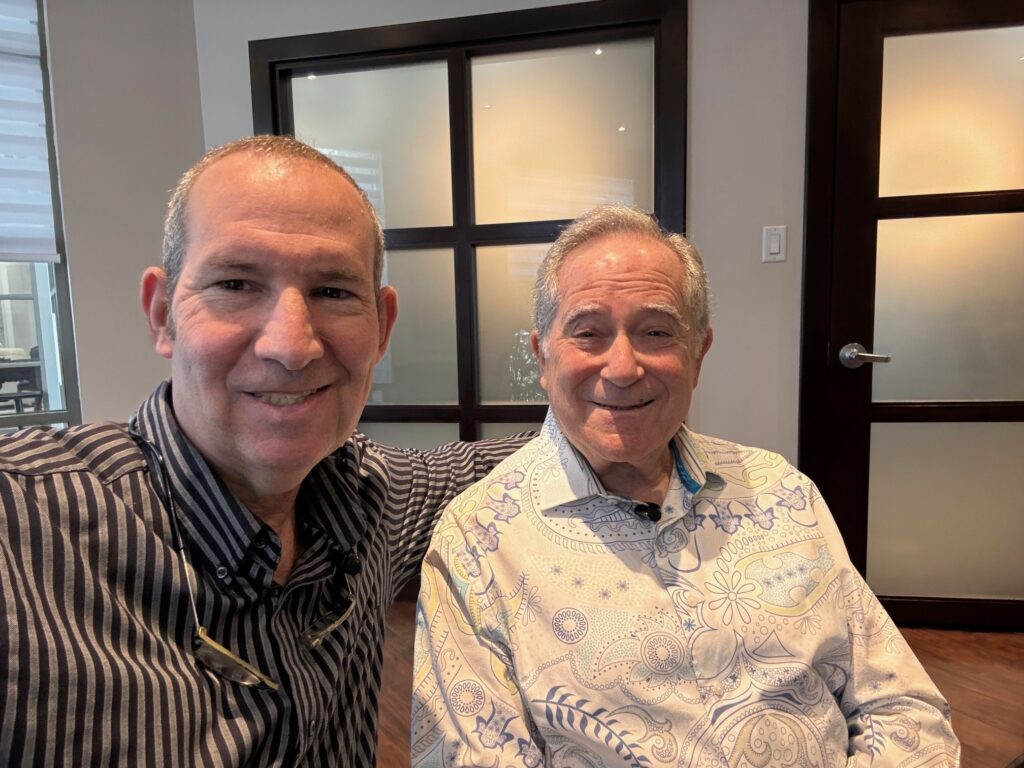
It is always nice to profile one of my constituents in Côte Saint-Luc District 2. Brahms Silver and his wife Vivian have been a pleasure to deal with, always supportive of my initiatives by providing timely advice and feedback.

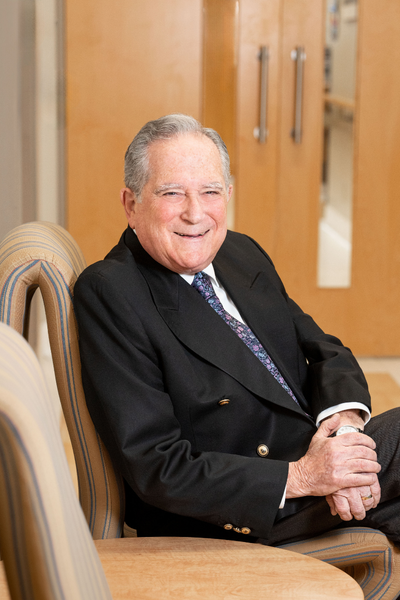
As a former board certified oncology social worker at the Jewish General Hospital (JGH), Brahms met patients from all walks of life, each with their own unique stories and challenges. Today, he is a proud donor to the JGH and engaged in an active campaign with the Foundation. After receiving some of the literature it peaked my interest. So, I reached out to Brahms and asked if he could sit down with me to record a podcast and this story on my website.
Please listen to the podcast here: https://soundcloud.com/themikecohenpodcast/brahms-silver-discusses-his
This is fascinating account of a man who originally wanted to be a rabbi and ended up running a highly successful food distribution business. When he sold the latter at the age of 55 , he did the unthinkable by enrolling at McGill where over a five year period he earned Bachelor’s and Master’s degrees in Social Work. In 2003, he was hired by the JGH, where for almost 20 years he helped an array of oncology and palliative care patients. The work brought a lot of meaning to his own life, as well. Now that he is retired, his goal is to make a difference by contributing to the JGH’s areas of greatest need across the hospital. With pride and humility, he is also a member of the 1934 Society, a community of donors who have included the JGH in their estate plan.
“Through it all, I treated everyone with the same compassion, dignity and respect,” Brahms said of his JGH career. “I learned that when a patient is sick, the whole family is impacted. I supported every affected person to the best of my ability, striving to help patients and their families find meaning to help them cope. The work brought a lot of meaning to my own life, as well! When necessary, I would assist in navigating the healthcare system, obtaining financial aid and securing housing. To me, the JGH is more than a hospital – it’s a lifeline, a place of healing and compassion. It’s where I was born and an important part of my own story. Committing to a gift in my will communicates a vital message to my sons and the community at large that the JGH is a harbour of compassion and healing. It’s part of my legacy, given from the heart.”

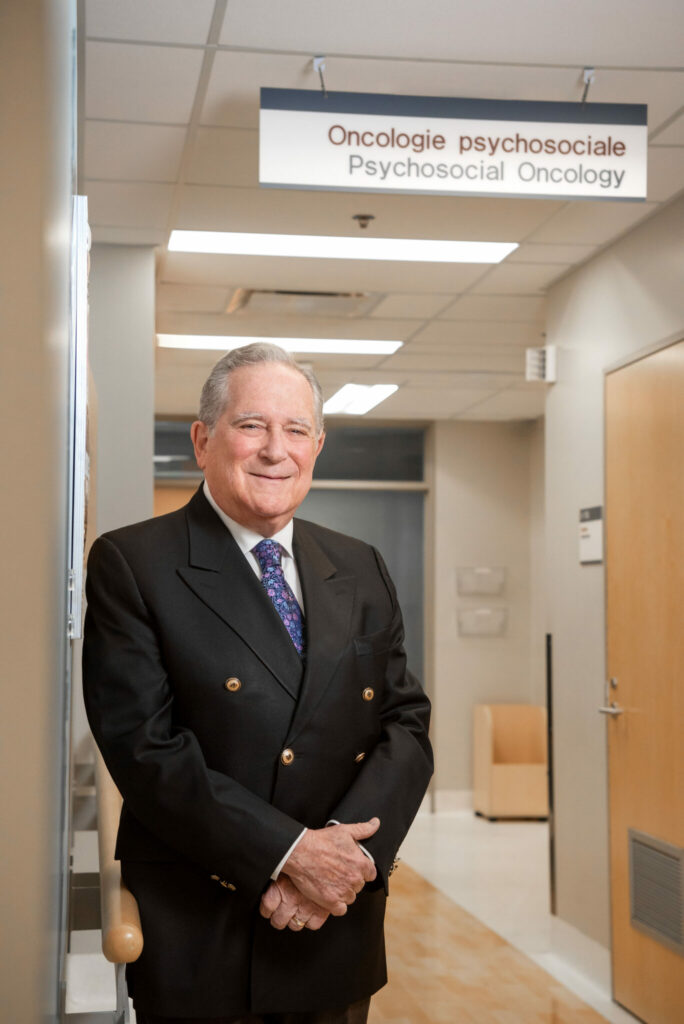
Brahms grew up under the commanding presence of the late Rabbi Dr. Harry Joshua Stern, the senior rabbi of Temple Emanu-El in Westmount. “Under his influence, I came to believe that I too was destined to be an ordained rabbi,” he recalled. “So, after noticing a small ad in the Anglo-Jewish press about a new undergraduate program at the Hebrew Union College-Jewish Institute of Religion in collaboration with the University of Cincinnati, I applied and was accepted. Soon, however, it became apparent that at that stage in my life, I was not adequately prepared to meet the challenge of the program’s rigorous academic requirements.”

Brahms returned to Montreal and after graduating with a B.A., he entered the family business and built it up over three decades. Soon after the business sold in 1994, he became the president of Temple Emanu-El Beth Sholom.
Being an oncology social worker is not a simple task. “True, it is never easy to be a witness to suffering, and, in some cases death,” Brahms explained. “Nevertheless, it is a privilege to be invited into peoples’ lives at a time when they are coping with the harsh reality of a life-threatening disease. For me, oncology social work is calling, much as the rabbinate was at one time .”
You can learn more at https://www.jghfoundation.org/ways-to-give/legacy-giving or by sending an e-mail to plannedgiving@jghfoundation.org. Until May 15, 2026, donations supporting the JGH’s hospital priorities will be matched. This offer applies only to new one-time donations up to $50,000.
Brahms Silver : une reconversion extraordinaire, de l’homme d’affaires à l’acteur social : un engagement envers l’Hôpital général juif
C’est toujours un plaisir de présenter l’un de mes électeurs de la circonscription 2 de Côte-Saint-Luc. J’ai eu beaucoup de plaisir à travailler avec Brahms Silver et son épouse Vivian, qui ont toujours soutenu mes initiatives en m’apportant des conseils et des commentaires opportuns.
En tant qu’ancien travailleur social en oncologie certifié à l’Hôpital général juif (HGJ), Brahms a rencontré des patients de tous horizons, chacun avec son histoire et ses défis propres. Aujourd’hui, il est un fier donateur du JGH et participe activement à une campagne avec la Fondation. Après avoir reçu de la documentation, cela a éveillé mon intérêt. J’ai donc contacté Brahms et lui ai demandé s’il pouvait s’asseoir avec moi pour enregistrer un podcast et partager son histoire sur mon site web.
Voici le récit fascinant d’un homme qui, à l’origine, voulait devenir rabbin et qui a fini par diriger une entreprise de distribution alimentaire très prospère. Lorsqu’il a vendu cette entreprise à l’âge de 55 ans, il a fait l’impensable en s’inscrivant à l’Université McGill, où, en cinq ans, il a obtenu une baccalauréat en arts et une maîtrise en travail social. En 2003, il a été embauché par l’Hôpital général juif (HGJ) où, pendant près de 20 ans, il a aidé de nombreux patients en oncologie et en soins palliatifs. Ce travail a également donné beaucoup de sens à sa propre vie. Maintenant qu’il est à la retraite, son objectif est de faire la différence en apportant son aide aux services du JGH qui en ont le plus besoin. Avec fierté et humilité, il est également membre de la Société 1934, une communauté de donateurs qui ont inclus le JGH dans leur plan successoral.
« Tout au long de ma carrière au JGH, j’ai traité tout le monde avec la même compassion, la même dignité et le même respect », a déclaré M. Brahms. « J’ai appris que lorsqu’un patient est malade, c’est toute la famille qui est touchée. J’ai soutenu chaque personne concernée du mieux que j’ai pu, en m’efforçant d’aider les patients et leurs familles à trouver un sens à leur situation pour les aider à faire face. Ce travail a également donné beaucoup de sens à ma propre vie ! Lorsque cela était nécessaire, j’aidais à s’y retrouver dans le système de santé, à obtenir une aide financière et à trouver un logement. Pour moi, le JGH est plus qu’un hôpital : c’est une bouée de sauvetage, un lieu de guérison et de compassion. C’est là que je suis né et cela occupe une place importante dans mon histoire personnelle. En m’engageant à faire un don dans mon testament, je transmets un message essentiel à mes fils et à la communauté dans son ensemble : le JGH est un havre de compassion et de guérison. Cela fait partie de mon héritage, offert du fond du cœur. »
Brahms a grandi sous l’influence marquante du regretté rabbin Dr Harry Joshua Stern, grand rabbin du Temple Emanu-El à Westmount. « Sous son influence, j’en suis venu à croire que j’étais moi aussi destiné à devenir rabbin ordonné », se souvient-il. « Ainsi, après avoir remarqué une petite annonce dans la presse anglo-juive concernant un nouveau programme de premier cycle au Hebrew Union College-Jewish Institute of Religion, en collaboration avec l’université de Cincinnati, j’ai postulé et j’ai été accepté. Cependant, il est rapidement devenu évident qu’à ce stade de ma vie, je n’étais pas suffisamment préparé pour relever le défi des exigences académiques rigoureuses du programme. »
Brahms est retourné à Montréal et, après avoir obtenu sa licence, il a rejoint l’entreprise familiale et l’a développée pendant plus de trente ans. Peu après la vente de l’entreprise en 1994, il est devenu président du Temple Emanu-El Beth Sholom.
Être travailleur social en oncologie n’est pas une tâche aisée. « C’est vrai, il n’est jamais facile d’être témoin de la souffrance, et, dans certains cas, de la mort », explique Brahms. « Néanmoins, c’est un privilège d’être invité à entrer dans la vie des gens à un moment où ils font face à la dure réalité d’une maladie mortelle. Pour moi, le travail social en oncologie est une vocation, tout comme l’était autrefois le rabbinat. »
Pour en savoir plus, rendez-vous sur https://www.jghfoundation.org/ways-to-give/legacy-giving ou envoyez un e-mail à plannedgiving@jghfoundation.org. Jusqu’au 15 mai 2026, les dons destinés à soutenir les priorités hospitalières du JGH seront doublés. Cette offre s’applique uniquement aux nouveaux dons ponctuels d’un montant maximal de 50 000 $.
TRADUIT PAR DEEL.COM